
CHIP Leaders Present at the WPHA Conference
Convening for Impact: How Public Health Is Leading Through Partnership
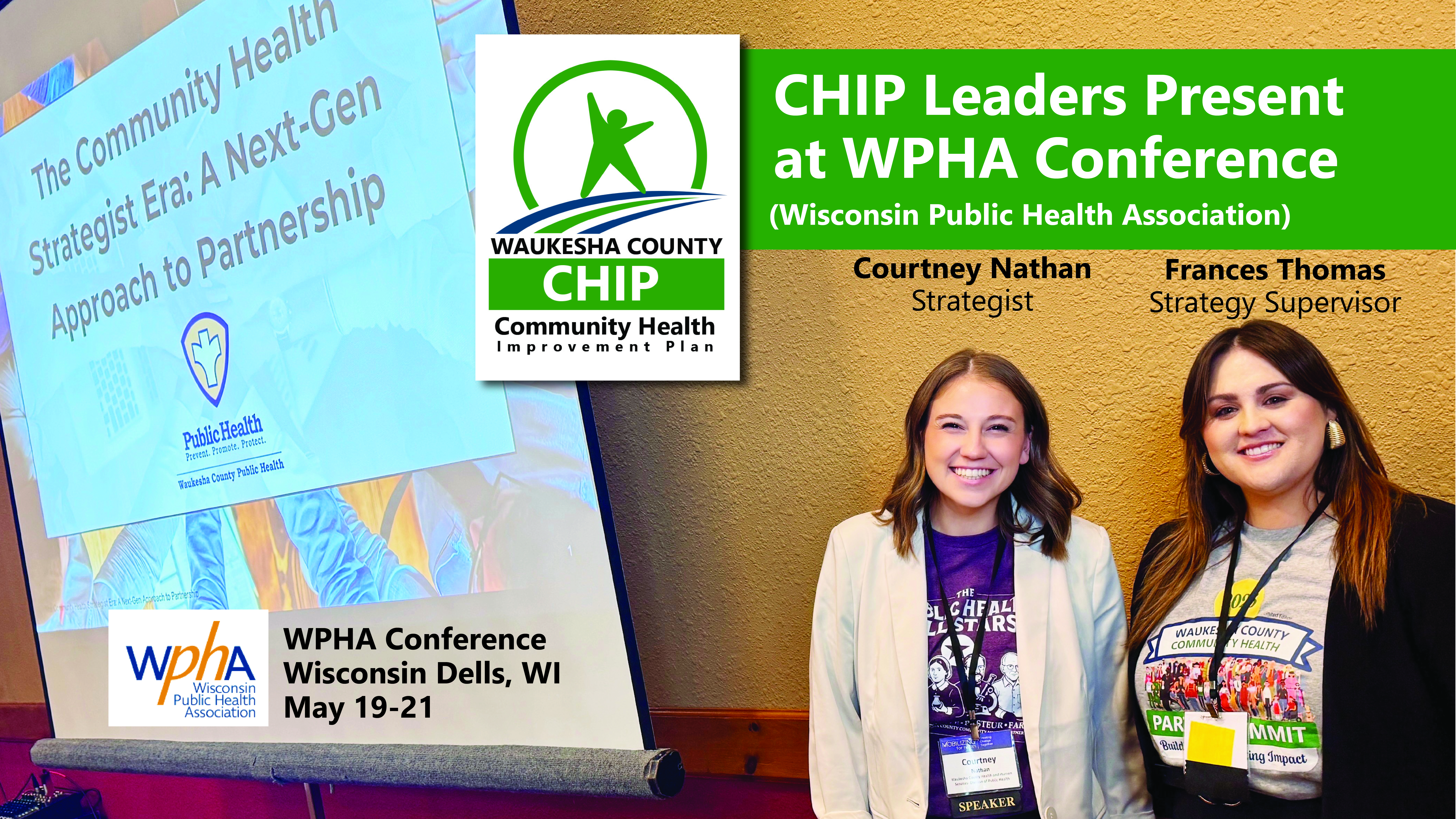
At the 2026 Wisconsin Public Health Association Conference, Waukesha County Public Health's Frances Thomas and Courtney Nathan, MPH, presented The Community Health Strategist Era: A Next-Generation Approach to Partnership, highlighting how public health has evolved from primarily providing services to helping convene, align, and mobilize community partners around shared goals.
Just a few years ago, Waukesha County Public Health did not have a dedicated strategy team. While foundational public health services were being delivered successfully, the lessons of COVID-19 and the emergence of the Public Health 3.0 framework challenged health departments nationwide to think differently about leadership, collaboration, and community impact.
Public Health 3.0 introduced the concept of the local health department as a Chief Health Strategist, an organization that brings partners together, aligns efforts across sectors, and helps communities address the root causes of health challenges. In response, Waukesha County Public Health created a strategy team in 2022, focused on strengthening partnerships and building systems that support long-term community improvement.

As Public Health has embraced its role as a Chief Health Strategist, one of the department's key accomplishments has been the development of a structured partnership framework that brings greater clarity, accountability, and intentionality to community collaboration. Developed through the efforts of the Public Health strategic plan and supported by staff across Public Health, the framework recognizes that relationships, collaborations, and formal partnerships each serve a distinct purpose. By defining these levels of engagement and establishing shared expectations, the framework helps align resources, strengthen accountability, and work collectively toward measurable community impact.
While the partnership framework provides structure and accountability, Frances and Courtney emphasized that there is no single "right" way to manage partnerships. Every community, organization, and initiative has unique needs and capacities. The framework serves as a guide for intentional collaboration, but like any system, it continues to evolve through feedback, experience, and lessons learned. Waukesha County Public Health remains early in this journey and is committed to continuously strengthening partnerships, refining processes, and building greater collective impact over time.
The creation of the Strategy Team represented more than a new organizational structure; it established a new way of working. By bringing together Community Education, Epidemiology, Communications, and Waukesha County's Overdose Fatality Review program, the team created a centralized approach to community health improvement that blends partnership development with data-driven decision-making. This structure allows Public Health to move beyond assumptions and toward evidence-based action, ensuring that strategic priorities, community investments, and partnership efforts are guided by both community voice and measurable data. The result is a more coordinated, accountable, and responsive approach to addressing the complex health challenges facing Waukesha County.
The presentation also explored a challenge familiar to many organizations: sustaining meaningful partnerships over time. During an interactive audience exercise, participants identified capacity, time, staffing, turnover, communication, and competing priorities as some of the greatest barriers to successful collaboration. These responses reinforced the importance of building partnership systems that can withstand organizational changes and continue advancing shared goals.

Frances and Courtney also shared how they helped lead a change in Waukesha County's Community Health Improvement Plan (CHIP) process. Historically, CHIP efforts operated on a five-year cycle. Through conversations with community members and partner organizations, the team recognized that a three-year planning cycle would better reflect the realities of maintaining engagement, adapting to changing community needs, and sustaining momentum. The transition allows partners to evaluate progress more frequently, respond more quickly to emerging issues, and keep strategic planning efforts actionable and relevant.
Today, Waukesha County Public Health works alongside more than 100 organizations representing healthcare, education, local government, nonprofits, business, faith communities, and community organizations. Together, these partnerships drive collaborative solutions that improve health and quality of life throughout the county.
As emphasized throughout their presentation, meaningful change happens when organizations move beyond working in parallel and begin working together toward shared outcomes.
The presentation was part of a strong lineup of breakout sessions and inspiring keynote presentations focused on innovation, collaboration, and the future of community health. To learn more about the conference, check out the website at: 2026 Annual Public Health Conference - WPHA
For those interested in learning more about the Community Health Improvement Plan and the partnerships helping shape a healthier Waukesha County, visit www.waukeshacounty.gov/CHIP.